🔥 SAVAITĖS PASIŪLYMAI: 💪 100% žemės riešutų kremas 1000 g – tik 5,99 €! ✦ 💊 Yamamoto Nutrition ZMA 120 kapsulių – tik 9,99 €! ✦ ⏳ Kiekis ribotas – užsisakykite dabar!
Visorių g. 2, Vilnius
🔥 SAVAITĖS PASIŪLYMAI: 💪 100% žemės riešutų kremas 1000 g – tik 5,99 €! ✦ 💊 Yamamoto Nutrition ZMA 120 kapsulių – tik 9,99 €! ✦ ⏳ Kiekis ribotas – užsisakykite dabar!
Vitamin K is a fat-soluble nutrient essential for blood clotting, bone health, and cardiovascular function, which comes in two main forms: K1 (phylloquinone), found in leafy greens, and K2 (menaquinones), produced by bacteria and found in fermented foods.
This post further explores the important role of vitamin K in maintaining bone strength, supporting heart health, preventing arterial calcification, potential anti-cancer properties, common supplements (including MK-7), user experiences, possible side effects, drug interactions, and recommended dosages.
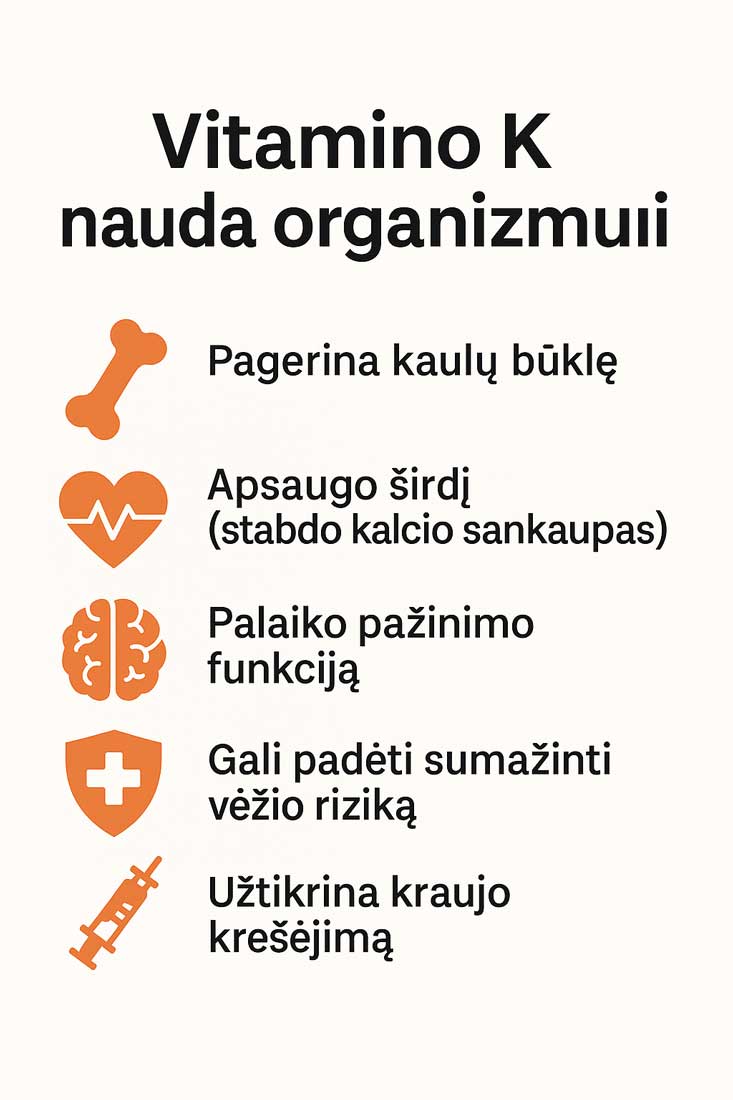
Vitamin K can improve bone health, reduce fracture risk by up to 50% in postmenopausal women, protect cardiovascular health, reduce cancer incidence by 75%, support cognitive function, and help regulate blood sugar levels.
Beyond blood clotting, vitamin K can be very beneficial for overall health. Studies show it can significantly improve bone density, and research indicates that in postmenopausal women with osteopenia, its use can reduce fracture risk by up to 50%.
Vitamin K can protect the cardiovascular system by preventing calcium deposits in the arteries and helping regulate blood pressure.
Perhaps most importantly, vitamin K may have anti-cancer properties — one study showed a 75% reduction in cancer cases over two years.
Vitamin K may also benefit cognitive functions, as higher vitamin K levels in the blood are associated with better verbal memory in older adults.
Additionally, vitamin K may support metabolic health by improving insulin sensitivity and blood sugar regulation.
Before starting any vitamin K supplements, dosages may vary depending on the individual, so consult a doctor before beginning any supplements.
When taking any supplements, it is important to drink water.
User experiences show that K2 (especially MK-7) may yield better results for cardiovascular health and bone density compared to K1, which primarily supports blood clotting functions.
Reviews often mention quality compliance issues, and third-party tests reveal that some products may contain only 80.8% of the advertised vitamin K content.
Users particularly value certified products for their reliability and additional nutrients such as calcium and magnesium.

"Yamamoto Nutrition Vitamins K2 + D3" combines vitamin K2 and vitamin D3. Vitamin D helps maintain normal calcium and phosphorus absorption, while vitamin K helps maintain normal bone health. It is a convenient choice for daily use to supplement vitamins K and D in the diet.

"Inlead Vitamin D3 + K2 + Magnesium" combines vitamins D3 and K2 with magnesium. Magnesium helps maintain normal muscle function, and magnesium, vitamin D, and vitamin K help maintain normal bone health. It is a convenient choice for those seeking a combined vitamin and mineral product for daily dietary supplementation.

"Weider D3/K2 + Magnesium" contains vitamin D3, vitamin K2, and magnesium. This combination helps supplement daily nutrition with vitamins and minerals. Magnesium helps maintain normal muscle function, and magnesium, vitamin D, and vitamin K help maintain normal bone condition. A pack of 120 capsules is a convenient choice for a longer period of use.
Vitamin K supplements can cause both mild and severe side effects. The most common injection site reactions may include pain, swelling, redness, and a sensation of warmth during use.
More severe problems can include severe allergic reactions manifested by difficulty breathing, facial swelling, hives, increased heart rate, or dizziness - all of which require urgent medical attention.
Systemic reactions may present as blurred vision, jaundice, or irregular heartbeat.
Excessive vitamin K intake can cause liver enlargement, hemolysis, and edema. Special caution is needed regarding drug interactions, especially with anticoagulants, which may become less effective.
Although synthetic vitamin K3 is toxic, natural dietary sources, based on established recommendations, rarely cause adverse effects.
When taking vitamin K supplements or injections, it is necessary to monitor for adverse reactions. If side effects occur, contact a doctor immediately.

Vitamin K works best together with vitamin D3, creating a synergistic effect that can support bone health and proper calcium utilization.
When taking vitamin K supplements, the combination with vitamin D3 can be the most beneficial, as D3 can increase calcium absorption, and K2 can direct calcium to the bones rather than the arteries. This combination can be especially effective in improving bone mineral density, especially in postmenopausal women.
Vitamin K2 can come in two main forms: MK-4 and MK-7. The bioavailability profiles of these forms may differ, but both forms can help prevent arterial calcification if taken together with vitamin D.
Some supplements may also contain iodine, which can help the thyroid gland.
For those who prefer natural sources over supplements, vitamin K2 and D3 can be found in fatty fish, egg yolks, and fermented foods. These natural food sources can provide beneficial nutrient complexes and may not require additional calcium supplements.
The recommended intake may vary depending on the individual, so consult a doctor before starting any supplements.
Adults need to take 90 mcg of vitamin K for women and 120 mcg for men per day, as well as in certain cases, including newborns who require prophylactic treatment, patients treated with anticoagulants, those recovering from surgery, and those at risk of bone fractures.
The daily vitamin K requirement can be calculated based on 1 mcg per kilogram of body weight. Pregnant and breastfeeding women may have the same 90 mcg requirement as non-pregnant women.
Children's needs may vary depending on age: from 2 mcg for infants to 75 mcg for adolescents.
Yes, pregnant women can safely take vitamin K supplements. Vitamin K2 can support fetal bone development and calcium regulation. Dosage may vary depending on the individual, so always consult a doctor before starting any supplements. Important related topics in this context include pregnancy safety, vitamin K supplements, fetal development, and calcium metabolism. The recommended intake of 90 mcg (micrograms) per day is only a general guideline.
Yes, vitamin K is naturally found in the human body. Human cells may not produce vitamin K. K1 may need to be obtained from food, while vitamin K2 can be synthesized by gut bacteria. The body can also convert K1 to MK-4 via the enzyme TERE1. Important elements related to vitamin K include K1 (phylloquinone), K2 (menaquinones), gut microbiome, MK-4 (a form of K2), and the enzyme TERE1 involved in conversion processes.
Vitamin K differs from other fat-soluble vitamins (A, D, E) primarily in five main aspects. Unlike other fat-soluble vitamins, gut bacteria can naturally synthesize vitamin K in the intestine. The biological half-life of vitamin K in the body may be shorter than that of vitamins A, D, and E. Vitamin K stores in the body may be lower than other fat-soluble nutrients. The risk of vitamin K toxicity may be minimal even if consumed in higher amounts. Finally, vitamin K can play a unique and essential role in blood clotting and calcium metabolism processes that other fat-soluble vitamins do not participate in.
Yes, children can take vitamin K supplements. Vitamin K supplements can be both injectable and oral. The dosage may vary depending on the individual, so always consult a doctor before giving any supplements to children. Vitamin K can be important for the blood clotting and bone health of growing children.
Yes, vitamin K can interact with common medications. Vitamin K can strongly interact with anticoagulants such as warfarin, potentially reducing their effectiveness. It can also interact with antibiotics, cholesterol medications, and blood thinners. For patients taking these medications, consistent use may be very important. It is advisable to consult a doctor for specific dosage information and possible interactions between vitamin K and any medications being taken.


You must login or register in order to make comment!