🔥 SAVAITĖS PASIŪLYMAI: 💪 100% žemės riešutų kremas 1000 g – tik 5,99 €! ✦ 💊 Yamamoto Nutrition ZMA 120 kapsulių – tik 9,99 €! ✦ ⏳ Kiekis ribotas – užsisakykite dabar!
Visorių g. 2, Vilnius
🔥 SAVAITĖS PASIŪLYMAI: 💪 100% žemės riešutų kremas 1000 g – tik 5,99 €! ✦ 💊 Yamamoto Nutrition ZMA 120 kapsulių – tik 9,99 €! ✦ ⏳ Kiekis ribotas – užsisakykite dabar!
Calcium is an essential mineral involved in the formation of bones and teeth, muscle contraction, nerve impulse transmission, blood clotting, and hormone secretion. About 99% of calcium in the body is in the bones, while the remaining 1% supports vital functions in cells and blood.
This article discusses the main sources of calcium, possible consequences of deficiency and excess, guidelines for supplement use, and strategies to maintain adequate calcium levels throughout life stages.
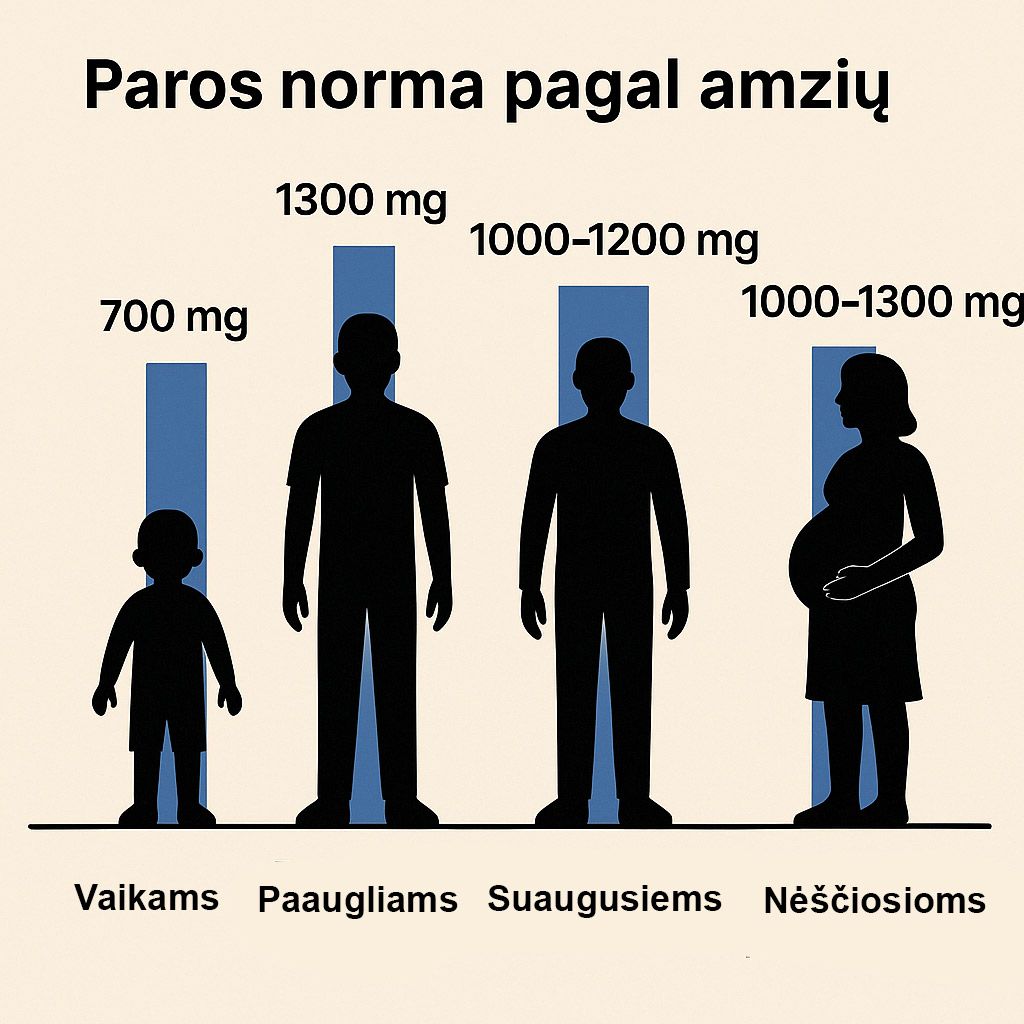
The daily calcium norm depends on age and physiological condition. Children aged 1-3 years are recommended about 700 mg per day, adolescents aged 9-18 years up to 1300 mg. Adults usually need about 1000-1200 mg per day.
For women over 50, calcium needs increase to 1200 mg due to decreased bone density after menopause. For men, this norm usually remains 1000 mg until age 70, then also 1200 mg.
Pregnant and breastfeeding women are advised to maintain their age-appropriate daily amount - 1000 mg for adults, up to 1300 mg for adolescents.
International guidelines may vary: WHO recommends only 500 mg per day, while the United Kingdom recommends 700 mg. US norms are often higher.
The exact requirement may depend on health status, so individual dosage should be discussed with a doctor.
Main sources of calcium are dairy products, fish with edible bones, tofu, leafy greens, legumes, supplements.
Plant-based sources also contain calcium: cabbage (200 mg/240 ml), fortified plant milk, amaranth (116 mg/240 ml), kale (250+ mg/240 ml). Calcium-fortified orange juice can provide 350 mg, and cereal breakfasts up to 20% of the daily norm.
When dietary calcium is insufficient, supplements may be useful. The most commonly used forms are calcium carbonate (40% elemental calcium) and calcium citrate (21%). Calcium carbonate should be taken with food because stomach acid is necessary for its absorption. It is often cheaper and found in antacid preparations.
May be relevant: Electrolytes for sports, sugar-free. + isotonic drinks
Calcium citrate may be more suitable for older people or those with reduced stomach acidity - it is well absorbed even on an empty stomach and less likely to cause digestive issues.
The optimal dose is up to 500 mg at a time, divided over several doses throughout the day. Supplements are often enriched with vitamin D to improve calcium absorption.
When choosing a supplement, it is important to consider the stated elemental calcium content and personal factors - digestive peculiarities, medications taken, or chronic diseases. Dosage should be individualized, so consultation with a doctor before starting use is necessary.

"Life Pro Calcium + Vitamin D" combines calcium and vitamin D. Vitamin D helps maintain normal calcium and phosphorus absorption, and calcium helps maintain normal bone condition. Calcium is also necessary to maintain normal dental condition. It is a convenient choice for those who want to get both important components in one product.

"All Sports Labs Calcium Complex" is a complex calcium supplement enriched with vitamins and minerals. Calcium helps maintain normal bone condition and is necessary to maintain normal dental condition. The product is intended for daily use to supplement nutrition when dietary calcium intake is insufficient.
Vitamin D is essential for calcium absorption in the small intestine. Without it, even adequate calcium amounts may be poorly absorbed, and the body may start breaking down bone tissue to compensate for the deficiency.
This partnership works through several mechanisms:
General recommendations - 1000-2000 mg of calcium and 10-20 µg of vitamin D per day, but exact doses depend on individual factors.
Before starting supplements, it is recommended to consult a doctor. Adequate water intake is also important for calcium absorption.
Higher risk of calcium deficiency may occur in women, adults over 60 years old, people with low income, and certain ethnic groups, especially non-Hispanic black individuals. These groups often consume less calcium, and older people may also face impaired absorption due to age.
Economic factors are also important - individuals with lower income more often choose products lacking calcium.
Calcium deficiency most commonly occurs in countries or regions with limited access to fortified or natural calcium sources. Older adults with insufficiently varied diets are particularly vulnerable.
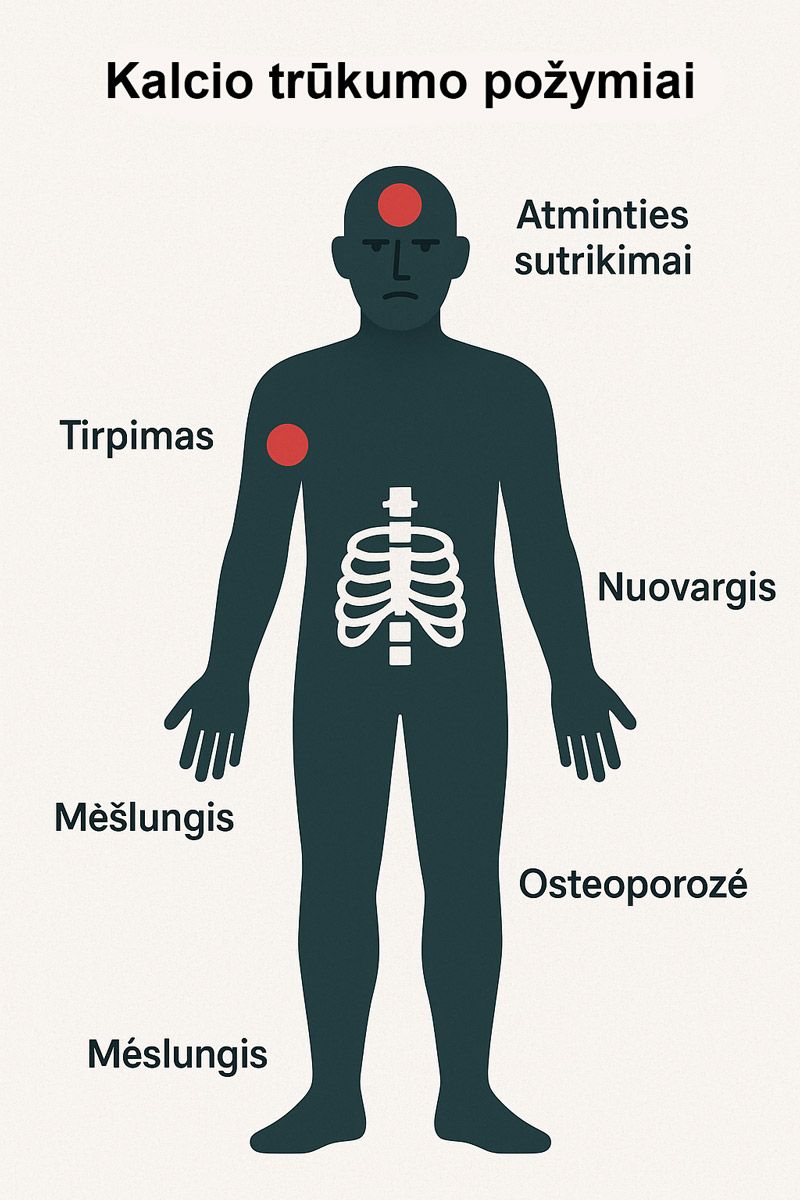
Calcium deficiency can manifest as muscle cramps, numbness, tingling around the mouth and extremities, general weakness, and fatigue. In severe cases, throat spasms that interfere with breathing may occur.
Neurological signs include memory impairment, irritability, confusion, and even seizures. These symptoms may indicate calcium's influence on nerve signal transmission.
Untreated deficiency can eventually cause osteoporosis, dental damage, heart rhythm disorders, and other serious health problems.
Calcium from mineral-enriched drinking water can contribute to maintaining overall levels. If deficiency symptoms appear, it is necessary to consult a doctor before starting supplements.
Adequate calcium intake (≥1000 mg per day) can reduce the risk of tooth loss by almost half. It strengthens enamel, helps protect against cavities and acid erosion, and supports jawbone density.
For people prone to osteoporosis, calcium is especially important - weakened jawbones can increase the risk of tooth displacement and loss. Calcium can neutralize the effects of acidic drinks, helping to maintain oral pH balance.
Vitamin D enhances this effect - it can improve calcium absorption by 30-40% and ensure its distribution in bone tissues. It can also reduce the severity of gum inflammation due to its anti-inflammatory properties.
Hypercalcemia is a condition where calcium levels in the blood exceed 10.2 mg/dl (2.55 mmol/l). Disruption of calcium regulation related to parathyroid hormone, calcitonin, or vitamin D can cause various symptoms.
The most common causes are primary hyperparathyroidism, certain malignant tumors, drug interactions, fluid deficiency, and metabolic disorders. Mild hypercalcemia may go unnoticed, but progressive cases can cause thirst, frequent urination, digestive problems, muscle weakness, and cognitive changes.
Diagnosis is made through blood tests assessing total, ionized calcium, and parathyroid hormone levels.
Treatment depends on the cause and may include fluid infusions, bisphosphonates, or surgical removal of the parathyroid glands. In each case, treatment strategy and dosage must be coordinated with a doctor.
Elevated calcium levels in the blood can damage the kidneys, disrupt cognitive functions, weaken bone structure, and impair heart function.
The kidney system is usually the first to be affected - calcium deposits may form, causing nephrocalcinosis, kidney stones, or even kidney failure.
Neurological symptoms include confusion, memory loss, depression, or, in severe cases, seizures and stupor. Paradoxically, bones weaken - calcium is released from them, which can lead to osteoporosis, pain, weakness, and increased fracture risk.
Cardiovascular complications can cause arrhythmia, high blood pressure, and ECG changes that may require treatment. Digestive problems such as nausea, constipation, abdominal pain, or even pancreatitis are also possible.
Calcium levels can be maintained by eating foods rich in this mineral: dairy products, fortified plant milk, leafy greens, almonds, sesame seeds, and legumes. Even distribution of these sources throughout the day helps better supply the body.
If diet alone is insufficient, supplements may be used. Calcium carbonate is recommended to be taken with meals, and doses exceeding 600 mg should be divided. Combining calcium with vitamin D can significantly improve its absorption.
Individual needs depend on age, gender, and health status. Women after menopause often require closer monitoring of bone density. In cases of osteoporosis risk or other health conditions, it is recommended to consult a doctor for an appropriate strategy.
Mineral-enriched drinking water also contributes to overall mineral balance.
Yes, if taken without food, calcium supplements can increase the risk of kidney stones. Unlike calcium obtained with food, which binds oxalates in the intestine, supplement calcium can enter the blood and urine together with oxalates, promoting stone formation.
The risk can be reduced by taking supplements with food, limiting sodium intake, and maintaining adequate water consumption. Prevention favors calcium from food sources.
Yes, calcium can reduce the effectiveness of some medications. It binds with antibiotics (e.g., tetracyclines, fluoroquinolones), HIV drugs (e.g., dolutegravir, elvitegravir), and inhibits levothyroxine absorption.
To avoid interactions, medications should be taken 2-4 hours before or 4-6 hours after calcium supplements. Coordinate timing strategy with a doctor, especially if taking multiple different medications simultaneously.
Yes, high doses of caffeine (about 800 mg per day) can increase calcium excretion in urine, leading to increased calcium loss in the body.
Caffeine can also inhibit osteoblast activity and promote bone resorption. The greatest risk is for postmenopausal women and those with calcium-deficient diets.
Moderate caffeine consumption (<300 mg per day) has minimal impact. Consuming calcium-rich foods along with coffee or tea can help avoid negative effects.
Yes, calcium can help regulate weight. Studies show that calcium may play a minor role in weight regulation.
Adequate calcium levels can suppress calcitriol, which may reduce fat accumulation and increase fat breakdown. Studies indicate that dairy sources may have a greater weight loss effect than supplements alone, with about 70% better results achieved in groups consuming a lot of dairy.
Although not a standalone solution, calcium can enhance weight loss alongside calorie restriction, especially by reducing visceral fat.
Important factors related to calcium and weight regulation include calcitriol, dairy sources, fat metabolism, visceral fat, and calorie restriction.
Yes, calcium supplements can have a negative impact on the cardiovascular system. Studies show that supplement use may increase the risk of myocardial infarction by up to 31% and promote vascular calcification.
The risk is higher for people with chronic kidney disease or diabetes.
Although some studies suggest a possible protective effect, doctors recommend choosing calcium-rich foods rather than supplements, especially if there is an increased risk of heart disease.


You must login or register in order to make comment!