🔥 SAVAITĖS PASIŪLYMAI: 💪 100% žemės riešutų kremas 1000 g – tik 5,99 €! ✦ 💊 Yamamoto Nutrition ZMA 120 kapsulių – tik 9,99 €! ✦ ⏳ Kiekis ribotas – užsisakykite dabar!
Visorių g. 2, Vilnius
🔥 SAVAITĖS PASIŪLYMAI: 💪 100% žemės riešutų kremas 1000 g – tik 5,99 €! ✦ 💊 Yamamoto Nutrition ZMA 120 kapsulių – tik 9,99 €! ✦ ⏳ Kiekis ribotas – užsisakykite dabar!
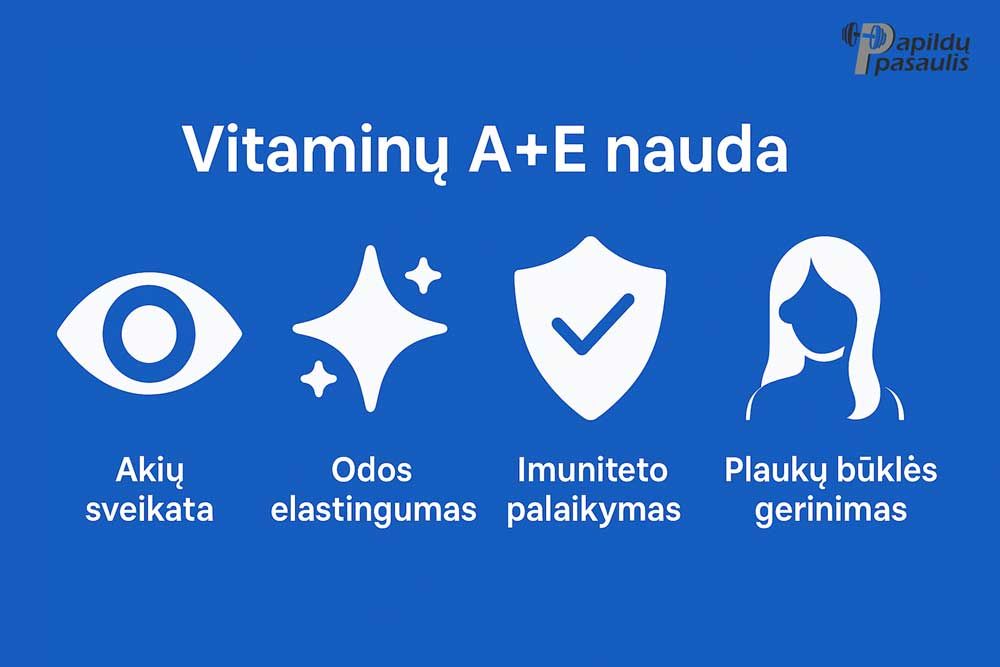
Vitamins A and E are essential fat-soluble vitamins that play an important role in various body functions, including supporting eye health, promoting skin elasticity, and maintaining the immune system.
The combination (A + E) works synergistically: strengthening antioxidant protection, reducing cell damage, especially beneficial for athletes and skin health.
These nutrients are important for overall health, but improper use can pose risks.
The benefits, proper use, and possible side effects of vitamins A and E are discussed in this article below.
Vitamins A and E interact well with other antioxidants and fat-soluble vitamins. Vitamin A is often combined with zinc, as this mineral helps vitamin A perform its functions more effectively, such as supporting skin and eye health. Vitamin E works well with vitamin C, as both enhance each other's antioxidant effects, helping protect cells from free radical damage. Additionally, vitamins A and E, being fat-soluble, are better absorbed when taken with healthy fats, such as omega-3 fatty acids.
Both vitamins reduce oxidative stress and muscle damage after workouts and strengthen immunity. Vitamin E is especially effective in reducing muscle damage - one analysis showed that doses up to 500 IU/day significantly reduce induced damage, especially in athletes.
Vitamins A and E may support eye health by protecting vision and preventing various eye disorders.
Vitamin A helps produce pigments in the retina, which are very important for night vision, and its deficiency can cause difficulty seeing in low light or night blindness.
Vitamin E may protect the eyes from oxidative stress caused by free radicals and reduce the risk of age-related macular degeneration (AMD) and cataracts.
Including foods rich in these vitamins, such as carrots, spinach, and nuts, in your diet can effectively support your eye health.
Incorporating vitamins A and E into your skincare routine can greatly improve skin health.
Vitamin A can stimulate cell turnover, promoting the growth of new skin cells and helping reduce the appearance of fine lines and wrinkles.
Vitamin E can protect the skin from oxidative stress caused by free radicals, help maintain skin elasticity, and overall health.
Using products containing vitamins A and E may improve skin hydration, making the skin softer and more elastic.
You may notice improved skin tone and texture, as these vitamins work together to combat dryness and dullness.
Serums, oils, or creams combining these essential nutrients can maximize their potential.
With consistent use, you may notice a significant improvement in your skin condition, making it look vibrant and youthful.
Some individuals may experience allergic reactions to vitamins A and E, with symptoms ranging from mild to severe, including redness, itching, swelling, or blistering.
If you plan to use products with these vitamins, first perform a patch test - apply a small amount to an inconspicuous area of skin and wait 24 hours to check for adverse reactions. If you experience any negative effects, discontinue use immediately and consult a doctor if necessary.
Be cautious with sources of these vitamins, as some topical preparations may contain additional ingredients that can cause allergies.
Always read labels carefully and choose products suitable for your skin type. If in doubt about a product, consult a dermatologist for personalized advice.
Awareness can help avoid adverse reactions and ensure your skin health is prioritized.
To maintain ideal health, it is very important to know the recommended daily intake of vitamins A and E. The recommended daily intake of vitamin A for adults is about 900 micrograms (mcg) for men and 700 mcg for women. If you are pregnant or breastfeeding, your needs may increase, so it is important to consult a doctor.
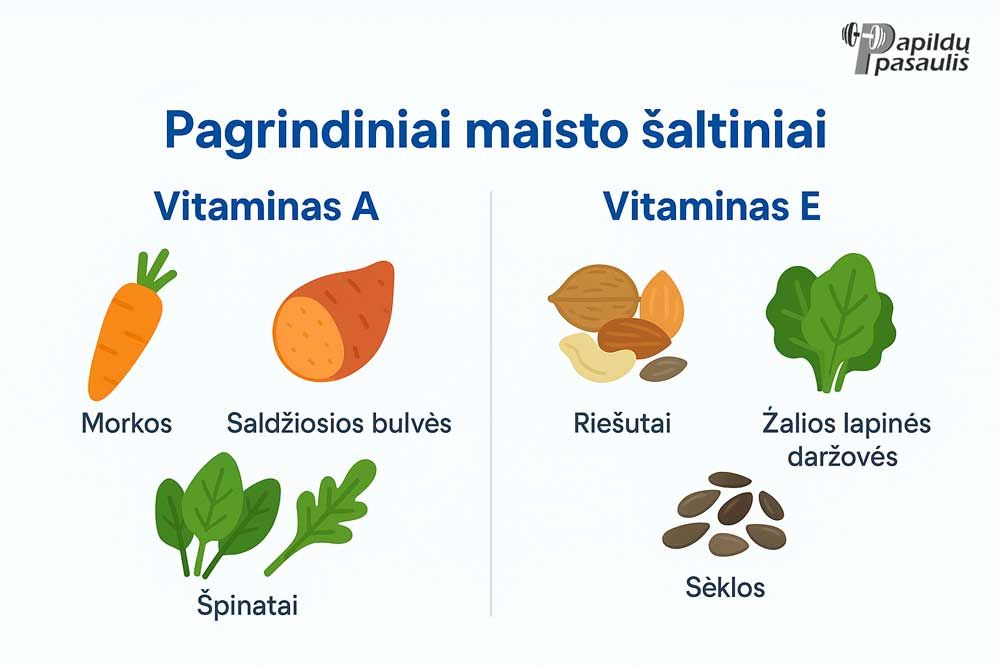
The recommended daily intake of vitamin E for adults can be 15 milligrams (mg). Both vitamins can be obtained through a balanced diet rich in fruits, vegetables, nuts, and whole grains. Carrots, spinach, sweet potatoes, and almonds can be excellent sources of these essential nutrients.
Excessive amounts, especially from supplements, can cause toxicity. Vitamin A poisoning can cause headaches, dizziness, and liver damage, while excessive vitamin E intake can disrupt blood clotting and increase the risk of bleeding.
Always try to consume the recommended amount through food, and if you plan to take supplements, consult a doctor to ensure they meet your health needs.
Yes, vitamins A and E can improve immune system function.
These vitamins play a vital role in supporting the body's defense. Vitamin A can support the production of white blood cells and help the body fight infections, while vitamin E can act as an antioxidant, protecting cells from damage.
Consuming foods rich in these vitamins or supplements can strengthen the immune response and improve overall health.
Just remember to maintain a balanced diet!
Yes, there are many food sources rich in vitamins A and E.
Carrots, sweet potatoes, spinach, and kale can be excellent foods containing vitamin A.
For vitamin E, nuts, seeds, and green leafy vegetables are best.
Including these foods in your diet can help increase nutrient intake and support overall health.
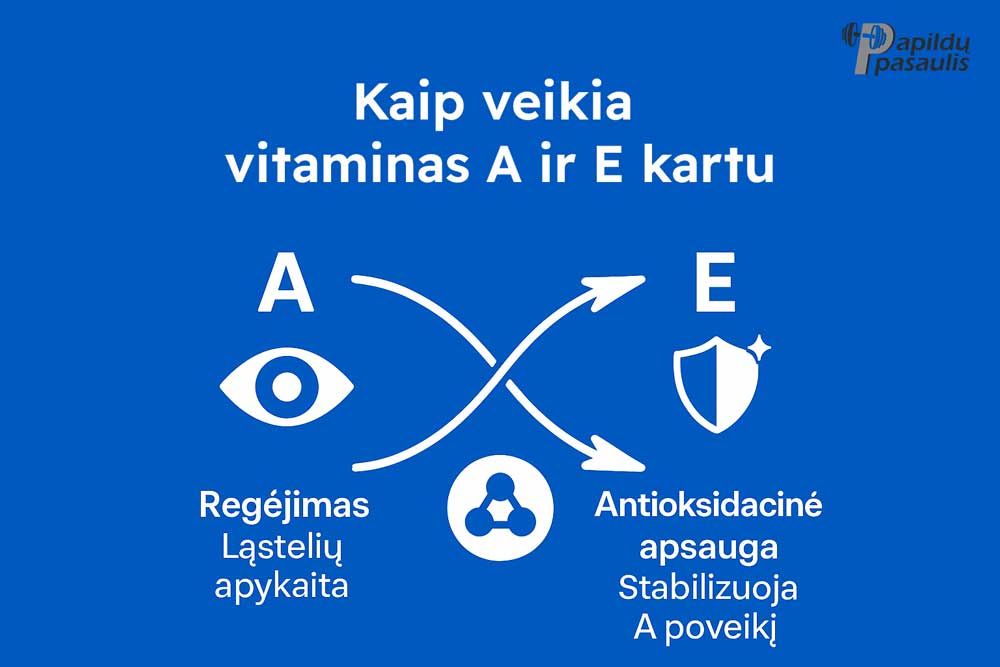
Vitamins A and E can work together to enhance your body's antioxidant protection.
Vitamin A can help vision and the immune system, while vitamin E can protect cells from oxidative stress.
Taking both vitamins together may allow them to be synergistically better absorbed and utilized, ensuring maximum benefit.
Additionally, vitamin E can help stabilize vitamin A, making it more effective.
Vitamins A and E can help improve hair condition.
Vitamin A can promote the production of healthy cells necessary for strong hair growth, while vitamin E can improve scalp circulation and nourish hair follicles.
Including these vitamins in your routine may make hair shinier and less prone to breakage.
They can help prevent dryness, making hair look and feel healthier.
Therefore, consider supplementing your diet or hair care products with them!
It may be unsafe to take vitamin A+E during pregnancy.
While vitamin A is essential for fetal development, excessive amounts can cause complications.
Before starting any supplements, it is best to consult a doctor. They will help determine the appropriate dose and ensure it is safe for you and your baby.
Generally, vitamins are recommended to be obtained from a balanced diet, so focus mainly on wholesome foods rich in these nutrients.
Vitamins A and E are very important for your health, improving eye and skin condition. They provide great benefits, but it is very important to be aware of possible allergic reactions. Follow the recommended daily intake to avoid toxic effects, especially from supplements. Remember that a balanced diet can help achieve balanced nutrition. By understanding how these vitamins work, you can make informed decisions about your health and safely enjoy their benefits.


